




The Eight-Hundred-Thousand-Dollar Hole
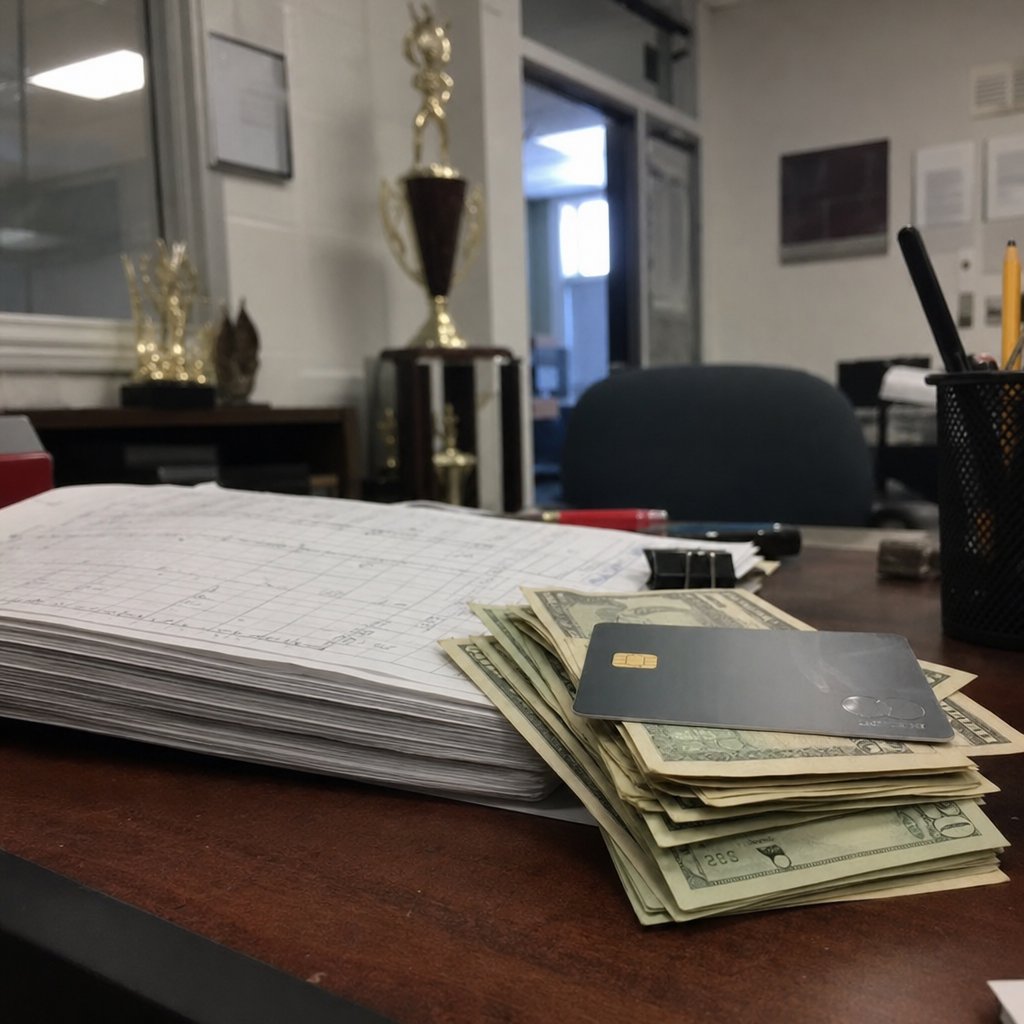
The number landed like a thrown shot put: $836,739.56. That was how much, investigators would eventually say, had vanished from the accounts of a regional school-sports association in a quiet corner of Michigan — money meant for fields, referees, medics, and trophies for kids. For years nobody noticed it was gone, because the man trusted to guard it was the same man bleeding it dry. Glen Whitaker had a reputation as the steady hand, the coordinator who always had the books in order and the championships running smooth. Coaches liked him. Boards trusted him. Parents had no reason to think twice. But somewhere under the bleachers and behind the spreadsheets, a hole had been opening for nearly ten years, one quiet withdrawal at a time. And the most disturbing part wasn't how much he took. It was where the money went next.
The Man Who Ran The Games

Certified to teach back in the mid-1980s, Glen Whitaker had spent decades building exactly the kind of resume that puts a person above suspicion. By the time the story turns, he held the title of Coordinator of Secondary Athletics for a regional school-sports association — the body that stitched together several school boards and ran the sporting events their students competed in. It was a job built entirely on trust. He collected payments from the partner boards. He managed the costs of fields, venue rentals, referees, and medics. He decided how the athletic and financial awards for winning teams were handled. And crucially, he kept the accounting records and prepared the annual financial reports himself. In other words, the person spending the money was the same person checking the receipts. For most of his career, that closed loop simply meant efficiency. Then, slowly, it started to mean something else entirely.
Trust With No Second Set Of Eyes

Every fraud needs a gap, and Whitaker's gap was the oldest one in the book: he answered the questions and graded his own answers. The partner boards sent their money in good faith, assuming the championships were expensive to run — and they were. Renting venues, paying officials, hiring medics, buying awards: it all added up, and the totals on Whitaker's annual reports always looked about right. Nobody on the outside had the time, the access, or the suspicion to pull every transaction apart. Why would they? The games happened. The trophies got handed out. The reports balanced. For someone willing to abuse it, that trust was a wide-open door, and Whitaker, prosecutors would later argue, walked through it with his eyes open. He didn't take the whole pot in one greedy grab. He was patient. He was methodical. And the way he chose to skim it was almost invisible by design.
A Thousand Dollars At A Time

The genius of it was how boring it looked. Rather than wiring out one catastrophic sum that an accountant might flag, Whitaker bled the association in modest, forgettable bites — usually withdrawals of about $1,000 to $1,200 at a time, by debit card or cash, again and again across the years. A grand here. Twelve hundred there. Each one small enough to slide past a glance, each one plausibly a legitimate cost in a budget full of fields and referees and medical staff. Investigators would later total just this category of personal withdrawals at roughly $461,962 — nearly half a million dollars, siphoned off in increments you could mistake for petty cash. It was the financial equivalent of a slow leak, the kind that empties a reservoir before anyone realizes the water's gone. And while that money quietly moved from the kids' account to his own life, Whitaker was already spending it on something far more permanent than groceries.
The Pool In The Backyard

This is the part that turns a spreadsheet crime into something uglier. The money meant to put medics on the sidelines and trophies in young athletes' hands wasn't just disappearing into a bank balance — it was being poured, literally, into the ground behind Whitaker's house. Funds from the association went toward installing a swimming pool at his home. More went to landscaping the property, shaping the kind of comfortable suburban backyard most people save a lifetime for. Picture it: while one budget line was supposed to cover referees for a championship game, another version of that same money was hardening into the concrete shell of a private pool. The student athletes were running on fields and dreaming of trophies; their coordinator was sunning himself beside an amenity they'd unknowingly financed. For years, the books hid all of it behind tidy annual reports. But numbers, given enough time, have a way of refusing to stay quiet.
Smooth Reports, Rotten Core

Year after year, Whitaker stood as the calm authority on the association's finances. He'd prepared the reports, so he could speak to every line. He'd kept the records, so he could explain every gap before anyone thought to ask. To the boards relying on him, the picture he painted was of an organization that ran lean and clean. Behind that picture, the rot was structural. Every annual statement he signed was a small performance, a polished surface laid over a decade of theft. The danger of a trusted insider is exactly this: the better the cover story, the longer the crime survives. Whitaker had years of credibility banked, and he spent it the same way he spent the cash — quietly, steadily, without alarm. But a closed loop only holds as long as no outsider forces it open. And eventually, the association did the one thing Whitaker's whole scheme couldn't survive: it ordered a real, independent look at the money.
The Audit That Wouldn't Balance

It started, as these things often do, with numbers that simply wouldn't reconcile. A financial audit dug into the association's accounts — not the version Whitaker narrated, but the raw trail of withdrawals, debit charges, and cash that no annual report had ever fully explained. Line by line, the comfortable story came apart. Money that should have covered fields and officials kept tracing back to one man and one home. What the auditors found was alarming enough that it didn't stay an accounting matter for long: it triggered a police fraud investigation. Now trained investigators were following the same trail, and they weren't grading Whitaker's homework — they were building a case. When they finished totaling everything he had drained from the board, the full figure was staggering: $836,739.56. The pool. The landscaping. The endless thousand-dollar withdrawals. All of it now had Whitaker's name on it — and the law had questions he couldn't answer with a tidy report.
Suspended, Then Gone

The unraveling, once it began, moved fast. Whitaker was suspended as the investigation closed in, the trusted coordinator suddenly locked out of the very accounts he'd controlled for years. Then he resigned — stepping away from the title and the standing he'd spent a career building, as the case against him hardened. But walking away from the job didn't mean walking away from what he'd done. The audit had become a police file. The police file was becoming a criminal prosecution. And the man who'd once stood confidently before boardrooms explaining his flawless reports was now on the other side of the table, facing charges that put a number — and a name — to nearly a decade of betrayal. The resignation closed one door quietly. The next one wouldn't be quiet at all. Whitaker was headed to a criminal courtroom, where the consequences of a thousand small withdrawals were about to be added up all at once.
Three Years And A Bill He Can't Pay

In the end, the math was undeniable, and so was the verdict. Whitaker was found guilty of criminal fraud. The court sentenced him to three years in jail — a hard, concrete consequence for a hidden, drawn-out crime. But prison was only half the reckoning. He was also ordered to pay restitution of $771,439.56, an attempt to claw back the money that had slipped from the kids' championships into his own backyard. It's a figure that lands with a grim irony: the pool and the landscaping were permanent, but the ledger demanding repayment would follow him far longer. The patient man who'd taken a thousand dollars at a time now owed it all back in one overwhelming sum. Yet even a criminal conviction and a restitution order didn't close the final chapter. There was still the matter of his standing as a teacher — and a disciplinary board that was about to weigh in with language sharper than any sentence.
Stripped Of The Title
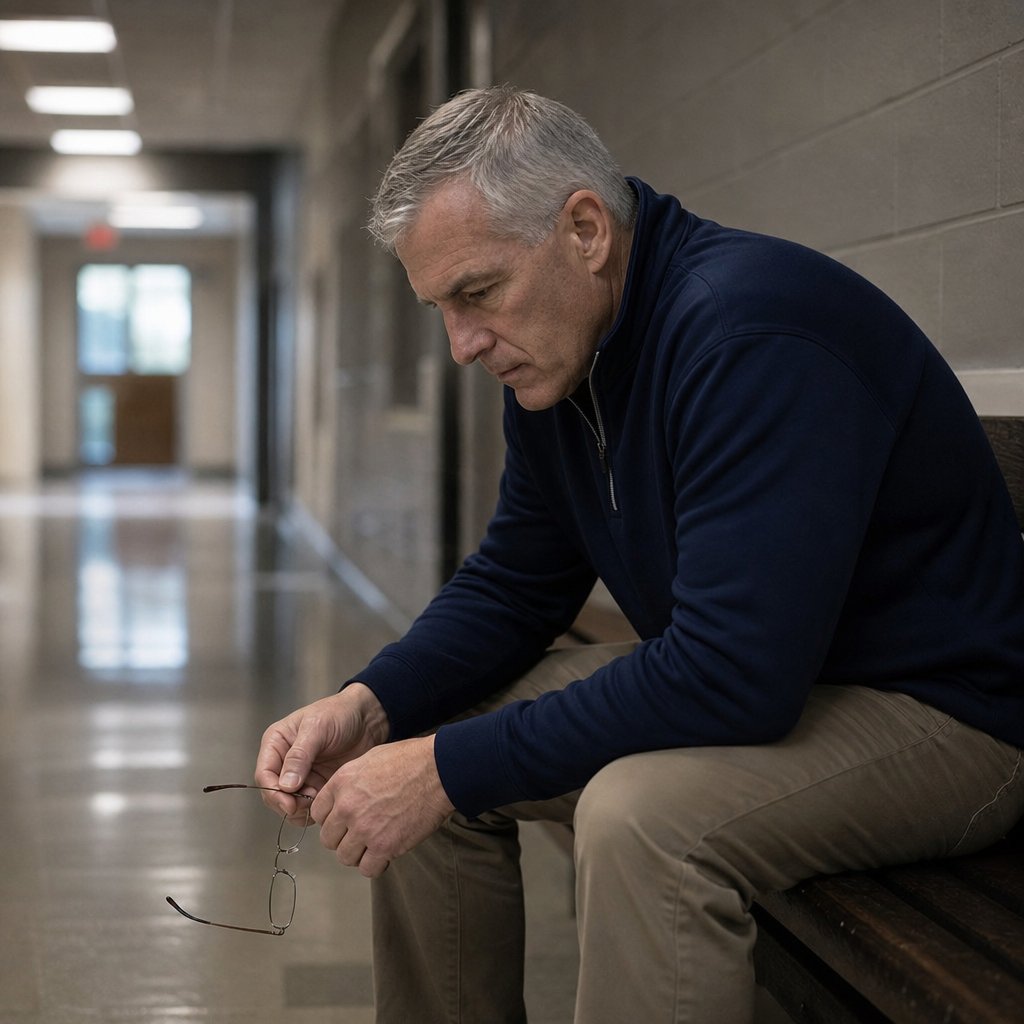
A teachers' disciplinary board took up the case and refused to soften it. It found Whitaker guilty of professional misconduct and revoked his teaching certificate, ending his career in the profession outright. In its findings the board didn't reach for gentle words. It called what he'd done a "premeditated, large-scale fraud over a 10-year period" and "a serious breach of trust" — language meant to make clear this was no momentary lapse but a deliberate, sustained deception. And then it named exactly who paid for it. The board said Whitaker had "betrayed his employer, the profession, the community, student athletes and children." A pool in a backyard. A decade of thousand-dollar withdrawals. A trusted coordinator who turned the kids' championship fund into his personal account. Stripped of his title, sentenced, and buried under a restitution bill, the steady hand had finally been seen for what he was. If the man counting the money is also the only one checking it, how many other quiet thefts are balancing their books right now?
A dramatized retelling based on real teacher-discipline records. Names, locations, and identifying details have been changed. Any resemblance to actual persons is coincidental.