




The Teacher Behind the Fake Names

Most misconduct cases involve a teacher losing their temper in the open. Megan Foster did the opposite — she hid. A teacher with a school board in Illinois, Foster ran a quiet campaign of false accusations from behind invented identities, targeting a child, a parent, and a fellow professional with lies she thought no one could trace back to her. She was wrong. By the time it was over, a disciplinary board had not only found her guilty — it had taken the rare step of publishing her real name. Here's what she did to earn that.
A Mother and a Teacher

On the surface, Foster was unremarkable — certified since the early 2000s, an experienced teacher and a parent herself. That ordinariness is what makes the case unnerving. This wasn't a stranger or an anonymous troll; it was a credentialed educator, someone trusted to model honesty for children, who decided to weaponize deception against the very people she had grievances with. And it started, as these things often do, with her own child.
It Started With Her Son

Foster became convinced a particular student had bullied her son. Whether out of a parent's protectiveness curdled into obsession, she set out to make that student pay — not by going through the proper channels, but by manufacturing a paper trail of accusations. A normal parent raises a concern with the school and lets the adults investigate. Foster decided to be judge, jury, and anonymous accuser all at once. There was just one enormous problem with the bullying she was about to report.
There Was Just One Problem

The student she accused of bullying her son didn't even go to the same school as her son. The two children attended different schools entirely. The bullying Foster was about to report up the chain, in writing, to officials — hadn't happened, and couldn't have happened the way she claimed. This wasn't a misunderstanding or an exaggeration of a real incident. It was an accusation built on nothing, aimed at a child, by an adult who knew, or should have known, that the story didn't hold together. And she sent it anyway.
She Invented a Person to Send Them

To make the lie land, Foster didn't sign her own name. Using a pseudonym, she emailed the principal of the school the student attended, falsely alleging he had bullied her son. She didn't stop at the child: in the same false account, she alleged that the student's teacher had ignored the bullying and failed to protect her son. So now a fabricated complaint, sent under a fake identity, was smearing both a student and a teacher to their own principal. A real person reading those emails had no way of knowing they were reading fiction written by an angry colleague.
Then She Took It Public

Private emails weren't enough. Foster, again hiding behind a pseudonym, posted false comments about the student and his parent on a public website — dragging a child and a family's reputation into the open for anyone to see. This is the part that separates a bad-faith complaint from a campaign. She wasn't trying to resolve anything; she was trying to do damage, and to do it where it would spread. A teacher who spends her days telling kids to be honest and kind was, off the clock, anonymously trashing one of them online.
A Second Fake Name, a Second Victim

And it still wasn't over. Using a different pseudonym this time, Foster turned her tactics on another professional entirely. She emailed his principal with a fresh false allegation — claiming he was planning to take several sick days so he could go on a family vacation. A petty, invented accusation, fired off under yet another fake identity, designed to get a colleague in trouble for something he never did. Two pseudonyms, multiple targets, the same playbook: become someone else, tell a lie, hit send, and let the damage do its work.
The Masks Came Off
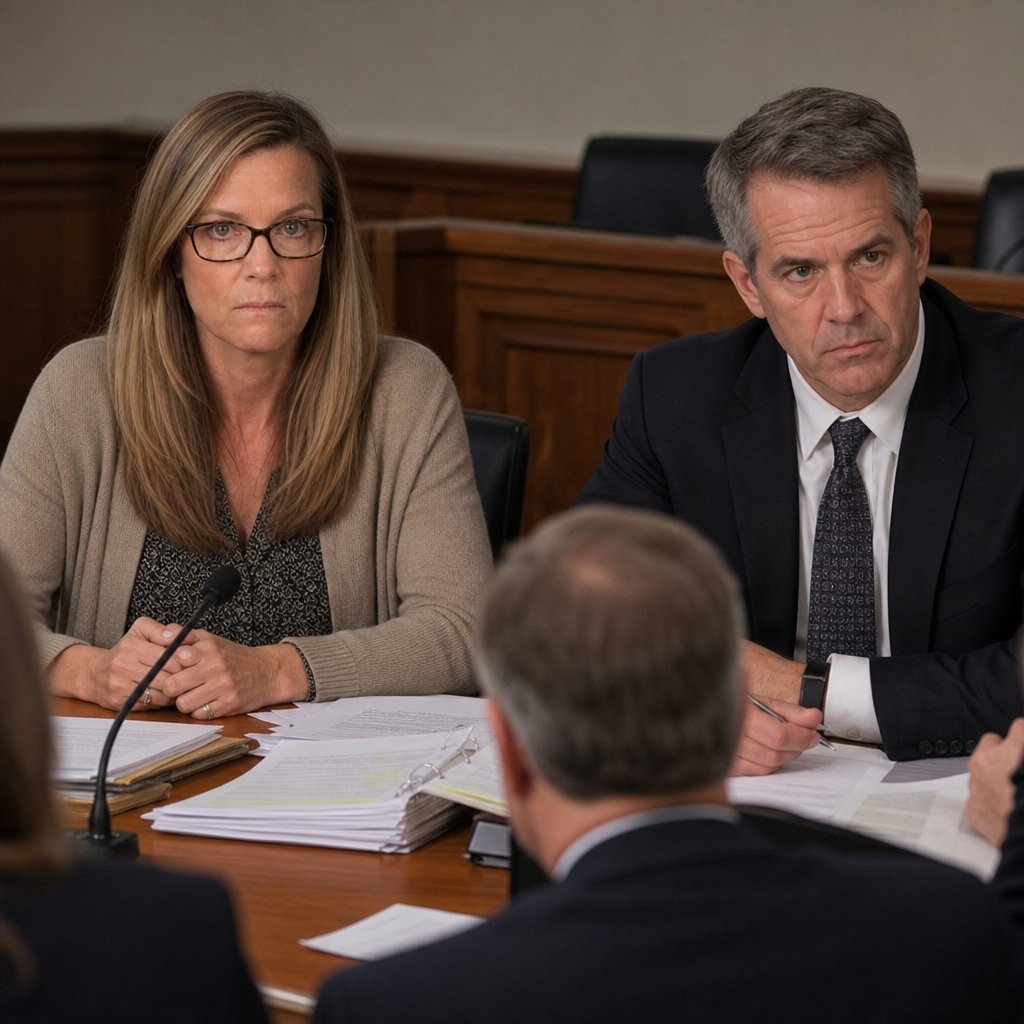
Eventually the threads were pulled and the pseudonyms led back to one person. Foster ended up in front of a teachers' disciplinary board, where the whole scheme was laid out: the false bullying claims, the fake emails to two principals, the public posts, the invented allegation against a colleague. Faced with it, she pleaded guilty, agreed to a statement of facts, and accepted a joint submission on penalty. The board found her guilty of professional misconduct. The only question left was whether her name — the real one, the one she'd worked so hard to keep out of it — would be made public.
Guilty — and Named
The board ordered Foster to appear for a formal reprimand and to complete, at her own expense, courses on ethics in the workplace and on appropriate personal and professional boundaries — a remedial education for an adult who'd forgotten the most basic rule she taught her students: don't lie about people. Then it did the thing that makes this case land differently from most. It published her name. Disciplinary summaries often shield the teacher's identity. The panel decided Foster had given up that protection.
Why Her Name Is Public
The panel's reasoning was pointed. Because Foster had repeatedly used pseudonyms to protect her own identity while making false accusations against a student, a colleague, and another professional, her request to keep her name out of the published summary was denied. In its written decision, the board put it plainly: the member's disregard for others' privacy and reputation forfeits her request that her name not be published. She'd spent her campaign hiding behind fake names and exposing other people. In the end, the board simply held her to the same standard she refused to give anyone else. She smeared a child from behind fake names — and lost her own anonymity for it. Fitting, or not enough? Tell us below.
A dramatized retelling based on real teacher-discipline records. Names, locations, and identifying details have been changed. Any resemblance to actual persons is coincidental.